Industry-Grade Sound: From the Home Setup to the Control Room
Industry-Grade Sound: From the Home Setup to the Control Room
By Thomsun Music • 6-minute read
Studio monitors have come a long way. They’ve evolved from classic passive speakers that demanded heavy power amps to modern digital powerhouses designed to bypass environmental flaws. Yet, one question remains: what makes a specific monitor dominate both the bedroom studio scene and professional control rooms alike?
More importantly, how does the Yamaha HS series continue to outperform competitors that carry much higher price tags?
The Secret to the “NS10” Legacy
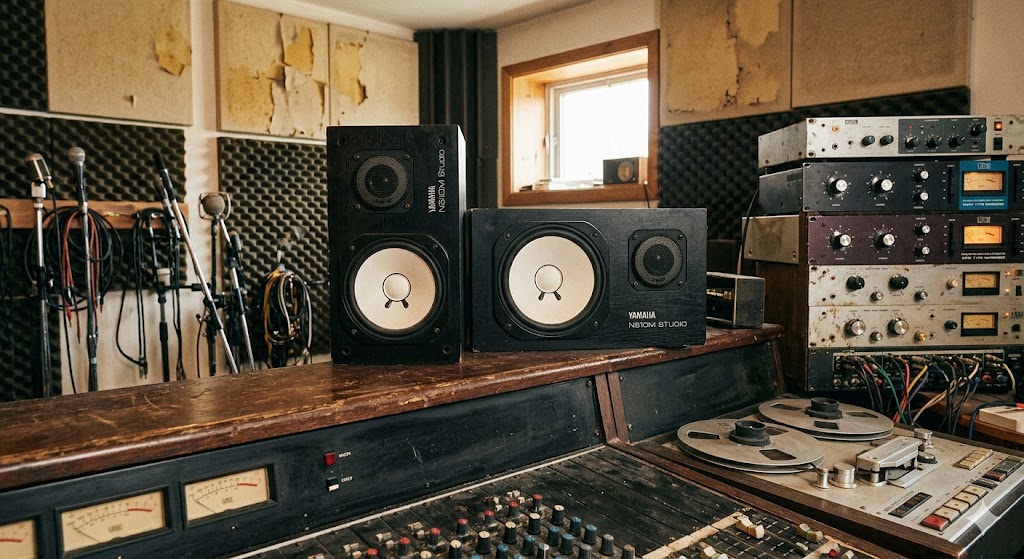
To understand the dominance of the HS series, we have to look back at its history—specifically its ancestor, the legendary NS10. In the 1980s, these speakers became the industry standard.
They didn’t earn that title by sounding “pleasant” or “sweet.” In fact, they were notoriously difficult to listen to. But they were honest. Engineers knew that if a mix sounded good on a pair of NS10s, it would sound good anywhere.
The Evolution of Honesty
Yamaha carried that flat, clinical philosophy directly into the modern HS line. While many contemporary brands hype the low end or boost high frequencies to make music more flattering, Yamaha remains committed to a response that doesn’t lie to you.
Although the original NS10s are no longer in production, that legendary performance lives on through the engineering of the HS series.
The Yamaha HS Lineup: Finding Your Perfect Match
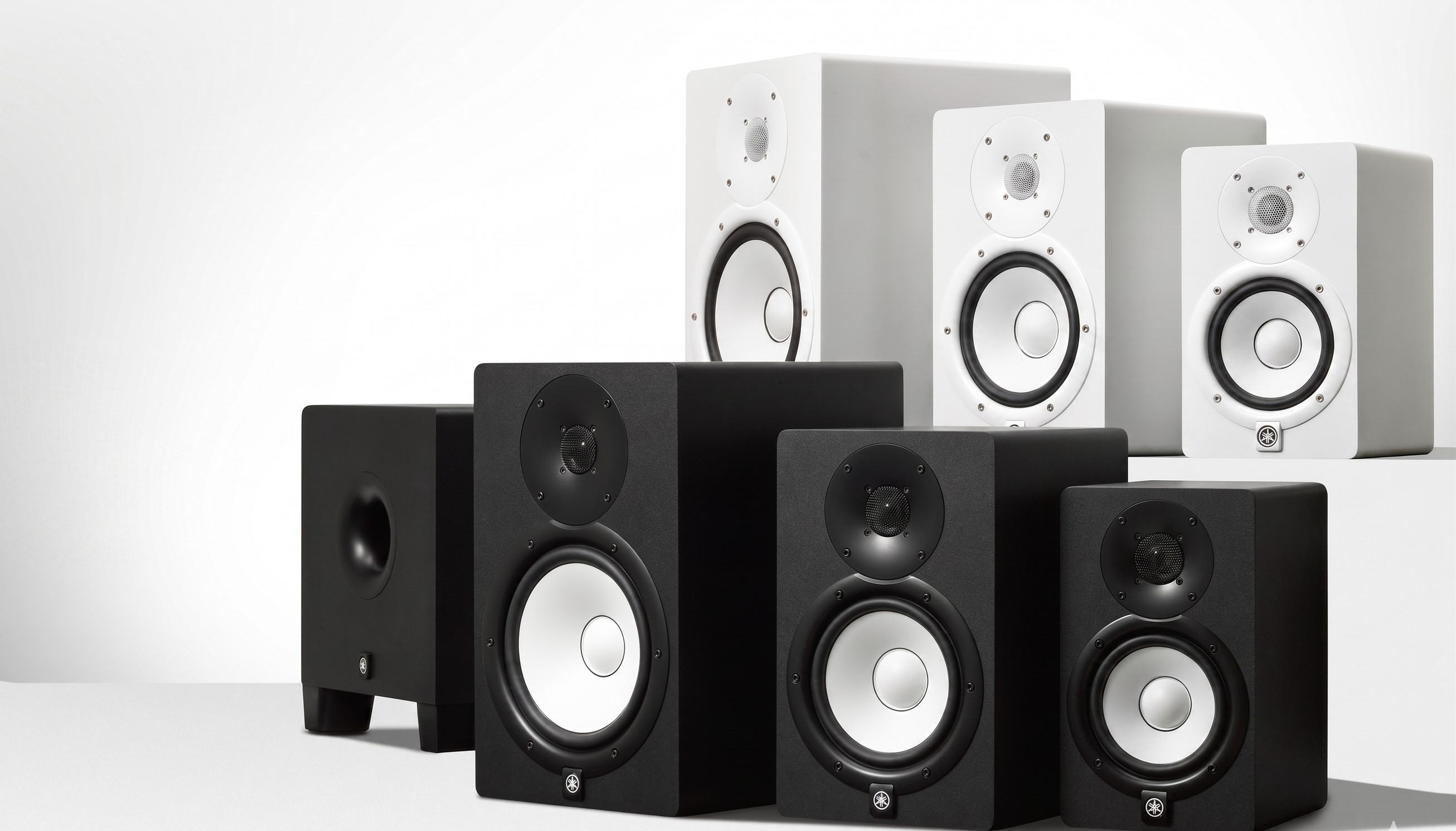
Choosing the right monitor isn’t about picking the biggest speaker on the shelf. It’s about matching the output to the size of your room and the depth of your projects.
The Power Players: HS5, HS7, and HS8
These core models are bi-amplified, meaning the woofer and tweeter each have their own dedicated power source. This ensures clarity, separation, and control—even at high volumes.
HS5: The Mid-Range Specialist
Ideal for tight spaces and vocal-focused work, the HS5’s fast 5-inch woofer forces precision where it matters most—the mid-range.
HS7: The Balanced All-Rounder
Widely considered the sweet spot of the range, the HS7 offers extended lows without the physical demands of larger monitors. Perfect for desks and medium-sized rooms.
HS8: The Full-Spectrum Flagship
With an 8-inch woofer reaching down to 38Hz, the HS8 delivers a powerful and accurate low end—often removing the need for a separate subwoofer when space allows.
The Low-End Anchor: HS8S Subwoofer
Designed for bass-intensive genres, the HS8S subwoofer extends down to 22Hz and features adjustable high and low cut controls for seamless integration.
The Installation Series (HS-I)
For mounted applications and immersive studio environments, the HS-I models offer identical sound performance with added installation flexibility.
The Compact Newcomers: HS3 and HS4
Built for creators on the move, the HS3 and HS4 bring Yamaha’s honest sound into compact, desk-friendly designs with simplified setup.
Which One Should You Choose?
- Small rooms: HS3, HS4, or HS5
- Medium studios: HS7
- Large control rooms: HS8
No matter which model you choose, you’re getting a monitor that tells the truth—ensuring your music translates everywhere it’s played.
Visit our Thomsun Learning and Experience Center for expert setup advice, or explore our stores and online platform to purchase your studio monitors.
Store Locations
• Wafi Mall
• Fish Roundabout, Deira
• Salahuddin Street
• Sahara Centre, Sharjah
• Abu Dhabi
• Selected Virgin Megastores